Homeowner's Guide to Home Siding | The Family Handyman
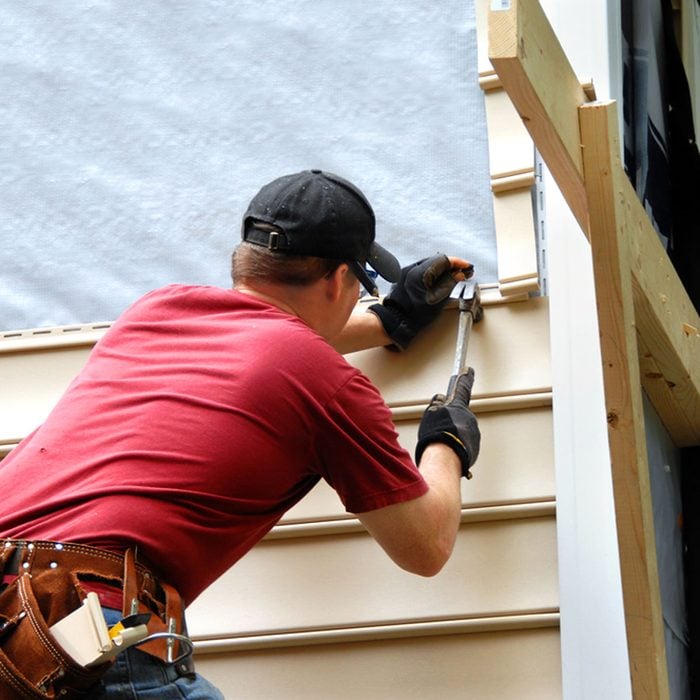
The right siding enhances a domicile'due south adjourn appeal, bolsters its structure and increases its value. Discover the type of siding that's best for your domicile.
Siding doesn't just make your home more attractive. It tin can also strengthen its structure by acting equally an outer pare, providing protection from the elements and impacting long-term house maintenance costs. It's important to choose siding that combines pleasing aesthetics with durability and reasonable maintenance to add maximum value to your abode.
"With so many materials and profiles to choose from, deciding on exterior cladding for your home tin be a challenge," says Derby Edifice Products CEO Ralph Bruno. "Today's savvy consumers demand low maintenance, while the architectural trends telephone call for mixed-material styles with varied textures and colors. Finding the right rest between fit and function is crucial."
Brand sure to go along climate and conditions in listen, says Modernize vice president Gregg Hicks. "The Pacific Northwest experiences large amounts of rain, while the Southeast experiences strong storms, hurricanes and harsh sunlight," he says. "Information technology'due south important that homeowners select siding that tin withstand their region's elements and partner with a local professional who has local knowledge to determine the best siding for your home."
To help y'all narrow your choices, here are the most mutual domicile siding options available when building or renovating.
Natural Forest
Elegant, timeless and suitable for new or historic homes, natural woods siding continues to be 1 of the most pop options. Although the texture and curb appeal is difficult to lucifer, natural woods likewise is amid the most expensive and high-maintenance siding choices for initial installation and long-term upkeep.
Pros:
-
Evokes loftier-end entreatment;
-
Piece of cake to change color past restaining or painting;
-
Comes in diverse styles (bevel, tongue-and-groove, clapboard, shingle, shake, etc.);
-
Eco-friendly.
Cons:
-
Expensive relative to other options;
-
Loftier-maintenance and can warp, rot or fade over time;
-
Decumbent to pests.
Engineered Wood
For the look of natural wood without the long-term maintenance issues, engineered woods siding is an platonic option. This blended siding is generally fabricated from a blend of forest fibers bound together by polymer or resin and then pressed to create the texture of real wood.
Engineered wood comes in lots of styles and colors. You tin choose a product with baked-in color or 1 to paint yourself for a custom look.
Pros:
-
Like curb entreatment every bit natural wood with less plush installation and maintenance;
-
Comes in panels or long boards for easy installation;
-
Pick of styles (bevel, tongue-and-groove, clapboard, shingle, shake, etc.);
-
Eco-friendly.
Cons:
-
Can be susceptible to mold and mildew if wet gets trapped behind information technology'
-
Colour or stain shade is permanent with some brands, then y'all can't change the expect in the hereafter.
Vinyl
You'd be hard-pressed to walk downwards a street in the U.South. without passing a business firm with vinyl siding.
I of the most popular options, this material is a oversupply-pleaser for its budget price tag and endless choice of colors and styles, from classic horizontal "boards" to trendy square "shakes" or fifty-fifty scalloped panels. One of the easiest sidings to install and maintain, vinyl siding can be a adept choice if you're on a limited budget.
Pros:
-
The almost affordable pick, with price-constructive installation and maintenance;
-
Wide variety of styles and colors.
Cons:
-
"Durability really depends on the maintenance practical and the local weather," Hicks says;
-
Low R-value with petty insulating effect;
-
Color is baked in and tin can't be repainted, so y'all're stuck with the color you choose;
-
Known to trap moisture inside walls, leading to mold and decay;
-
Can lower the value of your habitation, particularly if used to cover original wood siding;
-
Contains PVC, so non eco-friendly during production or lifespan. Besides difficult to recycle.
Insulated Vinyl
A step upwardly from its stripped-down counterpart, insulated vinyl offers the benefits of basic vinyl siding plus insulation, which saves coin on utility bills and boosts immovability.
This upgraded vinyl choice costs more simply is still one of the near affordable siding choices. There are lots of colors and styles to cull from. Many brands have upped the quality with UV-resistant finishes and actress rigidity to withstand strong winds.
Pros:
-
Relatively affordable, with toll-constructive installation and maintenance;
-
Insulation can aid lower your energy bills and guard against ambience noise;
-
Insulating foam inside the panels makes them less prone to dents and cracks than basic vinyl siding;
-
Variety of colors and styles that mimic real woods.
Cons:
-
Among the to the lowest degree durable siding types;
-
Can't be repainted if information technology fades or you want to update the color;
-
Moisture can exist trapped inside the walls, causing your house'due south wood frame to decay;
-
May lower your domicile'south value, especially on historic houses;
-
PVC cloth is not eco-friendly and a challenge to recycle.
Steel or Aluminum
Despite its loftier upfront cost, metal siding is an increasingly popular pick due to its durability and little to no long-term maintenance.
The wait of metal siding has improved significantly and many brands offer patterns and textures that faithfully mimic natural wood. With its natural resistance to the elements, mold, insects and burn down, pre-painted metal siding can offer up to twenty years of maintenance-free service.
Pros:
-
Aluminum siding is relatively inexpensive to buy and install;
-
Aluminum and steel are highly durable and low-maintenance;
-
Eco-friendly (metallic is recyclable).
Cons:
-
Steel siding is expensive to buy and installation tin can be fourth dimension-consuming, driving up the overall cost;
-
Aluminum siding tin can dent and the color can fade or plough chalky over time;
-
Steel siding is prone to rust.
-
Neither aluminum nor steel siding are adept insulators for temperature or racket.
Fiber Cement
This high-quality composite siding was invented in the 1980s by the Australian visitor James Hardie Inc. and is so durable that some brands offer upward to a 50 twelvemonth warranty.
Fiber cement is made of wood lurid mixed with Portland cement as a folder. It pairs the perks of masonry with the artful appeal of painted wood. Fire-, wet- and pest-resistant and easy to maintain, fiber cement siding tin be painted any colour. It comes in diverse styles, from clapboards and panels to exterior trim.
Pros:
-
Ane of the most durable types of siding, resistant to everything from UV exposure to wind;
-
Holds paint well — when painted past the manufacturer, tin last up to 15 years;
-
Environmentally neutral, breaking down into inert substances when removed.
Cons:
-
Low R-value, and then not a proficient insulator;
-
More expensive than vinyl siding;
-
Ofttimes must be installed past a professional person crew, driving up the cost.
Stucco
Stucco has been effectually since ancient times. Its classic elegance, durability and customizable range of colors and textures make it an indelible favorite for exterior cladding.
Made with a mix of Portland cement, limestone, sand, water and additives that increase its strength and flexibility, modern stucco is mostly applied in three coats and can last upwardly for decades when properly maintained.
Pros:
-
Stands upwardly well to the elements and requires fiddling maintenance;
-
Tin can be tinted whatsoever color and the superlative layer can exist smooth or textured;
-
Resistant to burn down and insects;
-
Offers some insulation against temperature and racket.
Cons:
-
Prone to cracking from earthquakes, or as a home settles or expands and contracts with temperature changes;
-
Must be installed past experienced professionals to maximize lifespan;
-
Subsequent paint jobs tin trap moisture inside the stucco, causing mold or pigment blistering.
Brick Veneer
Yous may be surprised to learn that many brick houses are actually brick veneers, a type of siding that is cheaper and easier to install than the existent thing only offers the same benefits. This type of home exterior became increasingly popular over the past few decades because it enhances the curb appeal and value of a home at a lower price than real brick.
Pros:
-
Durable, fireproof and low maintenance;
-
The same insulating power of natural brick against heat and noise;
-
Increases a home'southward value.
Cons:
-
Amid the most expensive options;
-
Takes longer to install than other types of siding and may need mortar articulation repair in the hereafter;
-
May require a foundation assessment to evaluate suitability.
Stone Veneer
Like brick veneer, stone veneer offers the value-boosting elegance and immovability of its natural counterpart just at a more than affordable cost. Nigh stone veneer siding is made of lightweight concrete or clay mixed with polymers for strength and pigments to give the finished production the advent of natural stone.
Pros:
-
Lighter, more affordable and faster to install than real stone;
-
Low maintenance, needing only occasional mortar-joint repair;
-
Easier than real stone to install because specialized masonry skills are not required;
-
Comes in various styles and colors and adds an appealing texture to exteriors.
Cons:
-
Mortar can crack from earthquakes, equally a home settles or expands and contracts with temperature changes, heavy traffic or moisture infiltration that freezes;
-
Improper installation can allow moisture to get behind the panels and cause rot and mold;
- Lower-quality stone veneer is sometimes painted rather than pigmented, so it can fade over time.
leadbetterslove1957.blogspot.com
Source: https://www.familyhandyman.com/article/types-of-siding-guide/
0 Response to "Homeowner's Guide to Home Siding | The Family Handyman"
Post a Comment